

Estimated reading time: 5 minutes
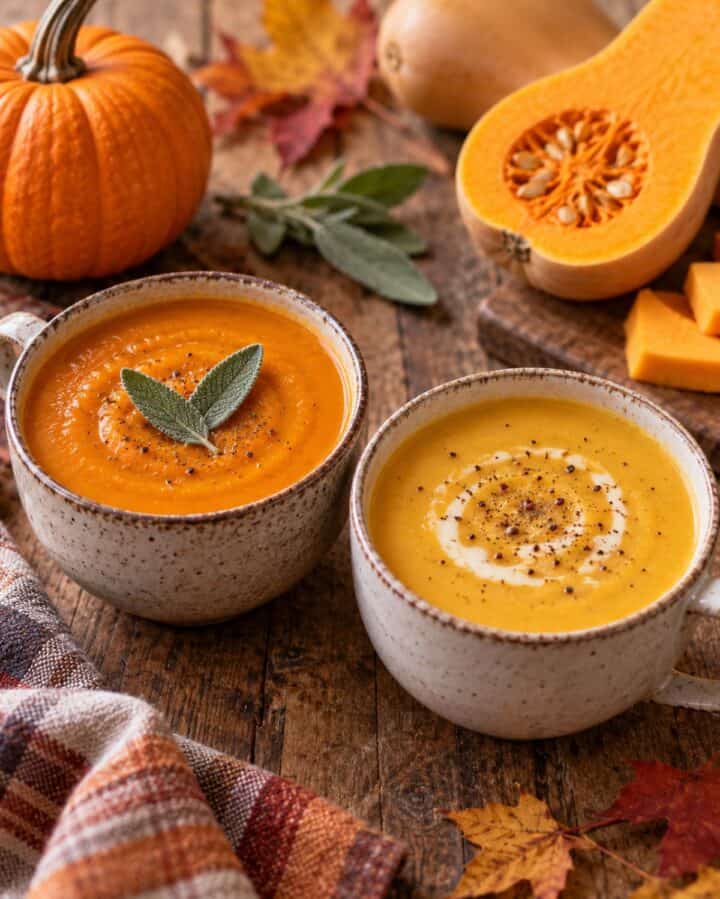
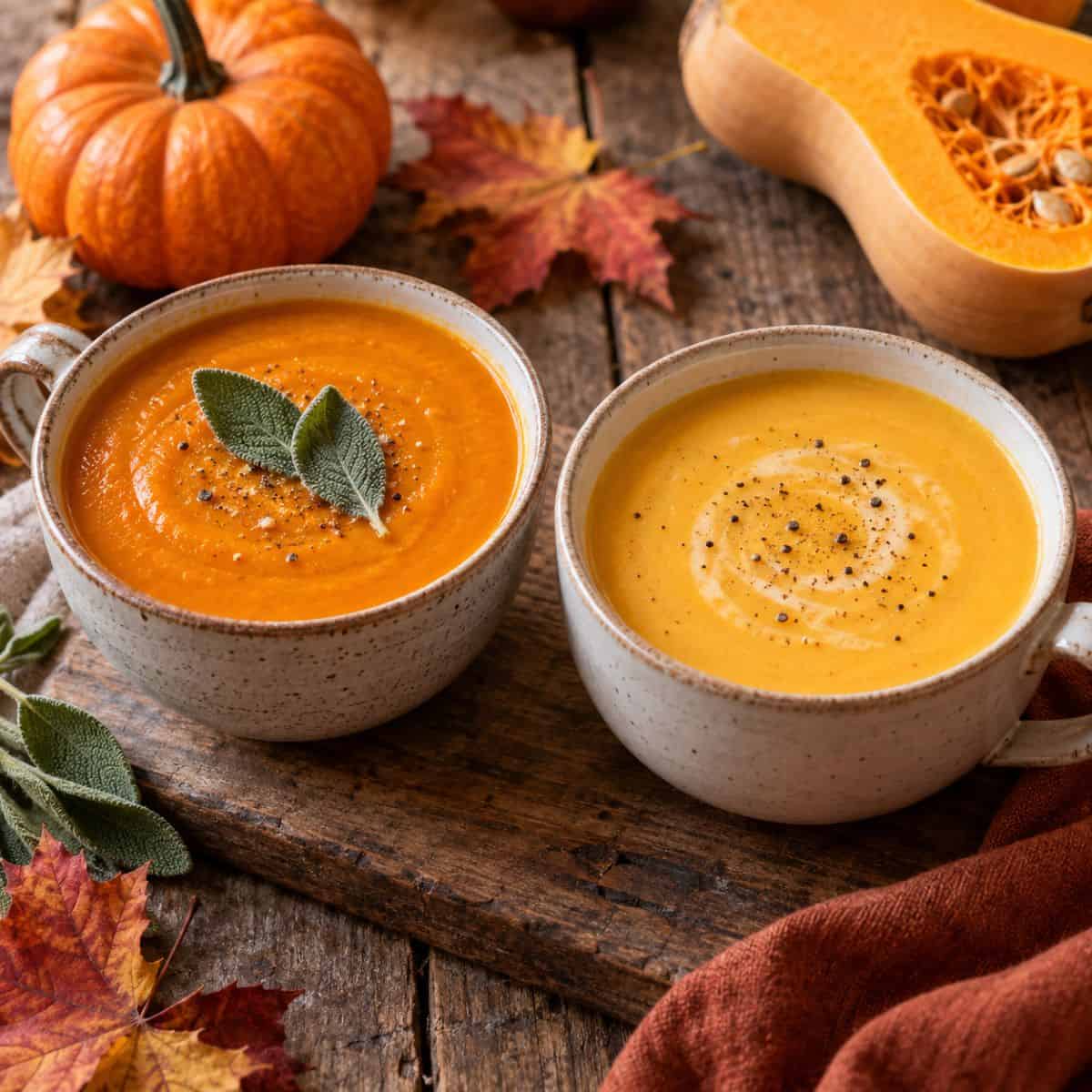
Here’s the perfect food pairing on the day after Thanksgiving (when it’s hard to think about food): turkey sandwich made with leftovers accompanied by a hot cup of creamy, pumpkin-butternut soup.
This simple, nutritious combo will fortify you after the holiday meal marathon or after a Black Friday shopping marathon, online or standing in line!
Key Takeaways
- Healthy Pumpkin and Butternut Squash Soups are great post-Thanksgiving meals that pair well with turkey sandwiches.
- Both pumpkin and butternut squash are nutritious, offering vitamins A and potassium while being low in calories.
- These soups support eye health due to their rich antioxidant content, particularly β-carotene and other phytochemicals.
- Butternut squash promotes better bone health through its calcium, fiber, and potassium content.
- Delicious recipes include a creamy bisque with apples or pears and a flavorful roasted veggie soup.
Why are Pumpkin and Butternut Squash Soups Healthy? 💪🏼
As a prelude to a couple of tasty and warming pumpkin-butternut soup recipes, here are some squash nutrition facts.
One cup of cooked pumpkin has 40 calories while a cup of cooked butternut squash has 80 calories because it boasts twice as many natural (not added) sugars.
Although many people give pumpkin puree to their dogs for added fiber, a cup of pumpkin puree only has 2 grams and a cup of cooked butternut squash has 6 grams.
Both gourds are loaded with phytochemical sources of vitamin A, particularly β-carotene. Butternut squash is rich in cryptoxanthin while pumpkin is packed with lutein and zeaxanthin.
The latter two compounds are part of the AREDS2 supplement that supports eye health and was formulated based on a study from the Institute of Eye Health, which is part of the National Institutes of Health (NIH).
Βeta-carotene was removed from AREDS2 because supplementation with it was linked with an increased risk of lung cancer for smokers. When this nutrient is eaten as food, it does not increase cancer likelihood.
There is a body of research indicating dietary β-carotene may lower the risk of cancer and for heart disease. That’s because it has demonstrated prowess as an antioxidant.
These antioxidant plant sources of vitamin A reduce cellular damage by mopping up free radicals in our bodies. They are absorbed best when cooked and eaten with some type of fat since vitamin A is fat-soluble.
Potassium is another nutrient abundant in pumpkin and butternut squash. The AI (adequate intake) is 2,600 to 3,400 mg/day for healthy adults. Cooked pumpkin contains 446 mg per cup and cooked butternut squash has 576 mg.
For most people, increasing potassium intake (from food, not supplements) has health benefits because of the relationship between sodium (salt) and potassium. The two minerals balance each other; greater potassium intake can moderate salt’s effect on your body.
| Nutrient | Butternut Squash | Pumpkin |
| Calories – 1 cup cooked | 80 kcal | 40 kcal |
| Carbohydrate | 21 g | 10 g |
| Protein | 1.8 g | 1.5 g |
| Fat | 0 g | 0 g |
| Fiber | 6 g | 2 g |
| Calcium | 80 mg | 30 mg |
| Potassium | 574 mg | 446 mg |
| Β-carotene | 9140 mcg | 4174 mcg |
| Cryptoxanthin | 6232 mcg | ---- |
| Lutein + Zeaxanthin | ---- | 2020 mcg |
Nutrition information for this table was taken from Food Data Central, compiled by the Agricultural Research Center of the USDA.
🩻Winter Squash for Better Bones
Butternut, in particular, is an excellent food for bone health, rich in three supportive nutrients: calcium, fiber, an potassium.
Get a delicious helping of this powerful winter squash nutrition with the following pumpkin-butternut soup recipes.
The first recipe boosts the sweetness of the butternut or pumpkin (you choose!) with apples or pears. It's adapted from the indispensable How to Cook Everything by Mark Bittman and accented with tarragon (ooh, la, la!), a creamy bisque is worth savoring.
If you are vegan and/or decide to use pears for this soup, use this link to see a video on how to make almond cream.
The second recipe is not as quick, but active time is less than 30 minutes and the resulting soup has a great depth of flavor. This is a long, slow veggie roast; molasses adds an undefinable dark underpinning to the mélange.
As I was getting ready to post this, I noticed a wonderful collection of butternut squash soups on Eating Well. Pumpkin-spice butternut squash soup? YES!!!
Related Recipes

Try this Butternut Squash Mousse Parfait, a cozy dessert with benefits for bone health that perfect for vegans (or anyone who likes butternut squash).
Want more seasonal soups? Creamy Pumpkin Tomato Soup with Apples is a great recipe to use up a can of pumpkin puree.
Carrot Celery Soup is a comforting bowl made from the classic trio of carrot, celery, and sweet onion. It's light and easy, and freezes beautifully!
Pumpkin or Butternut Soup with Fall Fruit
Equipment
- 1 Vegetable peeler or paring knife
- 1 Large spoon
- 1 Large, deep saucepan , or 5-qt Dutch oven
- Wooden spoon and/or spatulas
Ingredients
- 2 Tablespoons olive oil extra virgin
- 1 pound pumpkin and/or butternut squash peeled and seeded
- 1 pound apples or pears cored and chopped
- 1 large onion diced or chopped
- salt to taste
- black pepper to taste
- 4 ½ cups chicken stock or use vegetable stock
- ½ cup white wine
- ½ teaspooon tarragon dried
- ½ teaspoon ginger powdered
- pinch cloves
- ½ cup half and half or use coconut milk or oat milk

Instructions Start Cooking
- Wash hands thoroughly, lathering with soap and rinsing under running water before beginning prep.
Prep pumpkin/squash, apples, and onion
- Wash and dry the pumpkin or squash. Peel them and cut in half. Remove the seeds an chop into medium cubes or about an inch or slightly larger.
- Wash and dry the apples and remove the core. Create thick apple wedges from each half and then slice across the wedges creating pieces.
- Peel the onion and then wash and dry it. Cut the onion in half. Slice longitudinally through the onion half up to the stem end. Then, slice across to create diced pieces.
Making the Soup
- Heat the olive oil in a large, deep saucepan over medium heat and add pumpkin/squash cubes, apples or pears and onion. Stir to coat with fat and cook, stirring often, for a few minutes until onion is translucent. Season with salt and pepper.2 Tablespoons olive oil 1 pound pumpkin and/or butternut squash 1 pound apples or pears 1 large onion salt black pepper
- Add the stock (or water), wine, and dried spices (tarragon OR ginger and cloves). Bring to a boil; then, lower heat and simmer, partially covered, for about 30 minutes, until pumpkin/squash is soft.4 ½ cups chicken stock ½ cup white wine ½ teaspooon tarragon ½ teaspoon ginger pinch cloves
- Cool for a few minutes; then, use a hand-held immersion blender to puree, or use a regular blender and puree in batches. (Soup can be cooled and refrigerated at this point up to 3 days until you are ready to serve it.)
- Heat soup thoroughly but do not boil. Add half and half (or coconut or oat milk) and continue heating, taking care not to bring soup to a boil.Ladle into cups or bowls and garnish with an additional drizzle of olive oil, if desired.Enjoy!½ cup half and half
Notes
Nutrition
Roasted Pumpkin/Butternut Soup with Sage
Equipment
- Dutch oven or 5-quart soup pot
Ingredients
- 1 small pumpkin about 2 pounds
- 1 medium butternut squash 2 to 2½ pounds
- 1 large carrot large, cut into chunks
- 1 large onion sweet. cut into 6 or 8 wedges
- 1 head garlic cloves separated and papery skin removed
- 3 Tablespoons olive oil extra virgin
- 3 Tablespoons molasses light, not blackstrap
- salt to taste
- black pepper to taste
- 5½ cups chicken or vegetable stock divided use
- ½ cup ricotta cheese part-skim
- 1 Tablespoon Dijon mustard
- 1 Tablespoon sage leaves fresh, chopped
- ¼ teaspoon fresh nutmeg grated, optional
- 2 Tablespoons sherry optional
Instructions Start Cooking
- Wash hands thoroughly before beginning prep, lathering with soap and rinsing under running water.
- Preheat oven to 350° F.
- Wash and dry the pumpkin, butternut squash and cut them into quarters, removing the seeds. Save the seeds for roasting or another use, if desired.1 small pumpkin 1 medium butternut squash
- Wash the carrot and onion. Roughly cut the carrot into large chunks and the onion into several wedges. Separate the cloves from a head of garlic and remove the papery skin.1 large carrot 1 large onion 1 head garlic
- In a large roasting pan, arrange the squash quarters, skin side up. Add the carrot, onion, and scatter the garlic cloves around all.
- In a small bowl, mix together olive oil and molasses. Using a pastry brush, coat the pumpkin and squash with this mixture.3 Tablespoons olive oil 3 Tablespoons molasses
- Pour 2 ½ cups of stock or water around vegetables in the pan, taking care not to pour it on top of pumpkin and squash. Season all with a dusting of salt and ground pepper. Cover tightly with extra-wide, heavy-duty aluminum foil and transfer to oven. Roast for 1½ hours, until squash and pumpkin are very tender.5½ cups chicken or vegetable stock salt black pepper
- Take the roasting pan out of the oven and remove the foil cover. When the vegetables are cool enough to handle, scoop flesh from pumpkin and squash using a spatula or large metal spoon and place it in a stockpot or round, deep ovenproof casserole dish.Discard squash and pumpkin skins. Add the remaining vegetables to the pot, and carefully lift the roasting pan to pour the stock and juices into the vegetables.
- Add the remaining 3 cups of liquid (stock or water), ricotta cheese, mustard, sage, and nutmeg to the soup mixture. Simmer for 5 minutes, then remove from heat and cool slightly before pureeing with an immersion blender (or puree in batches in a countertop blender). Taste and adjust seasoning with salt and pepper as desired.½ cup ricotta cheese 1 Tablespoon Dijon mustard 1 Tablespoon sage leaves ¼ teaspoon fresh nutmeg
- Stir in sherry, if desired, and serve, garnished with fresh sage leaves or roasted pumpkin or squash seeds.
Notes
Nutrition
Would you like to save this?
You won't get spam from me, I promise!


jani
Certainly, thyme could be used in place of tarragon, and the flavor would be fine, just not as sweet and delicate. The tarragon plays well with the apples in the soup, so if you use thyme, you might also substitute a root vegetable for the apples -- carrots, parsnips, or even potatoes. Glad you enjoyed the nutrient info. Anytime you eat squash or pumpkin, you are doing your body a favor!
Ruth Hall
Love the idea of two types of squash, gourds, in the same soup! Would substituting thyme for tarragon change the flavor much? Thanks for outstanding inclusion of nutrients!