

Shrubs are sweet-and-sour elixirs also known as sipping vinegars, and this version concentrates pears, honey, and ginger root into a marvelous syrup with seasonal appeal. Shrubs are perfect for holiday parties and dry January.
Topped with seltzer and garnishes, this mocktail is a festive offering for the NA crowd. Make a batch or two, so you’ll have enough for parties and DIY holiday gifts for friends, hosts, and hostesses!
I earn from qualifying purchases at no extra cost to you as part of the Amazon Affiliate program. Thanks for your support!
😍What You’ll Love About This Recipe
- Easy to make on a stovetop (no special equipment needed)
- No refined sugar (naturally sweetened with honey)
- Stores well and tastes better after a few days
- Gluten-free and buzz-free
Ingredients
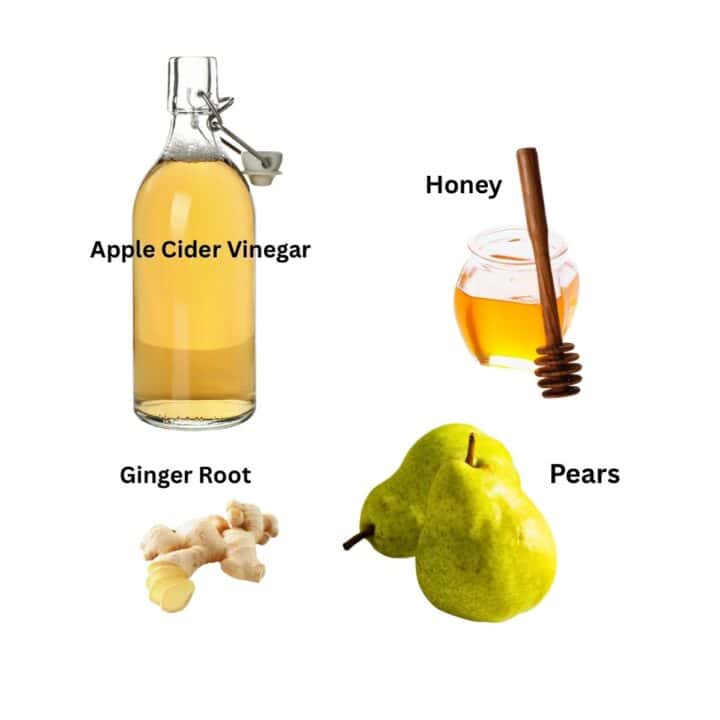
- 1 lb pears
- 1-inch knob fresh ginger
- 1 cup water
- ¾ cup honey
- 1 cup apple cider vinegar
- Optional flavor variations (e.g., cinnamon, star anise, vanilla)
Pears: I tested the recipe with thin-skinned Bartletts and with thick-skinned Comice varieties, and prefer the Bartletts, but the extra-sweet Comice pears also worked fine in the recipe.
Honey: Not all honey has the same flavor. Local honey, perhaps sourced at a farmers market, will reward you with a more complex flavor. The flowers and plants visited by the bees influence the taste and add nuances.
Variations
Consider adding a star anise pod to the concentrate, but don’t leave it in the cooled syrup. Vanilla is always nice or even some black peppercorns or a bit of cayenne to add spice.
Remove any large spices from the cooled syrup. Do not blend them into the final product.
How to Make (5 Basic Steps)
1️⃣ Wash your hands, lathering with soap and rinsing with running water for 20 seconds, before starting.
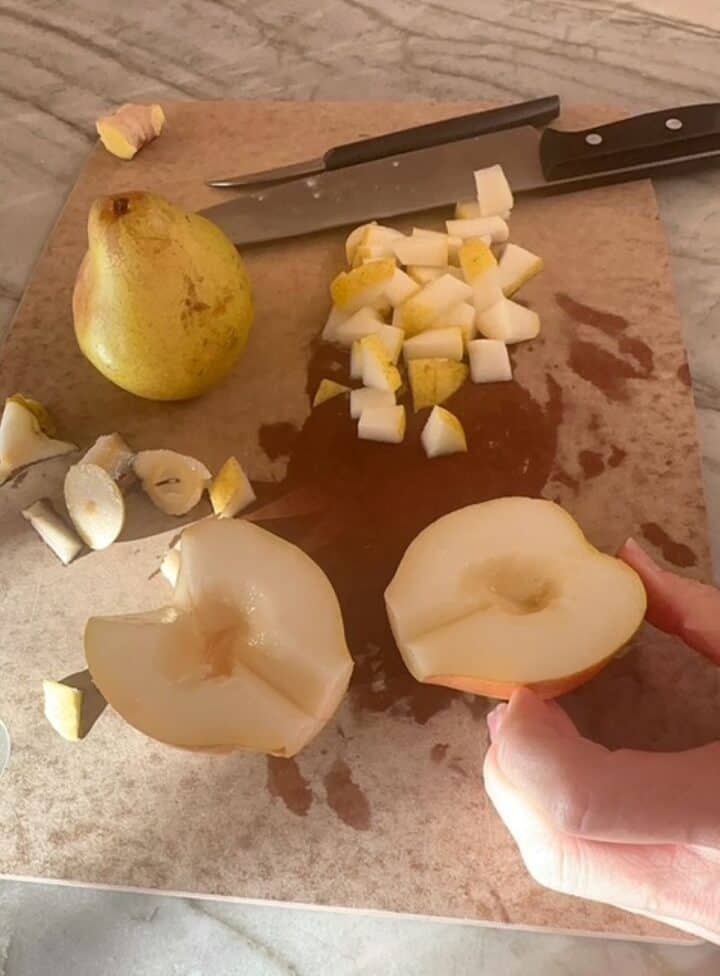
Prep Ingredients: Wash and chop pears (no need to peel unless you want to).
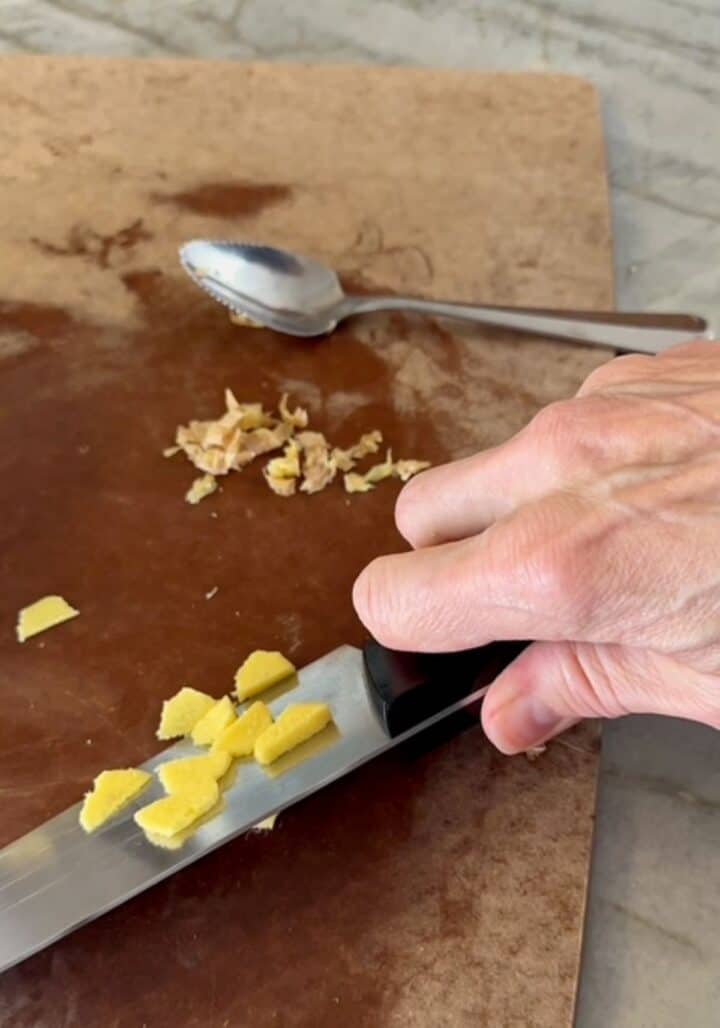
Wash the ginger root, and remove the peel before slicing.
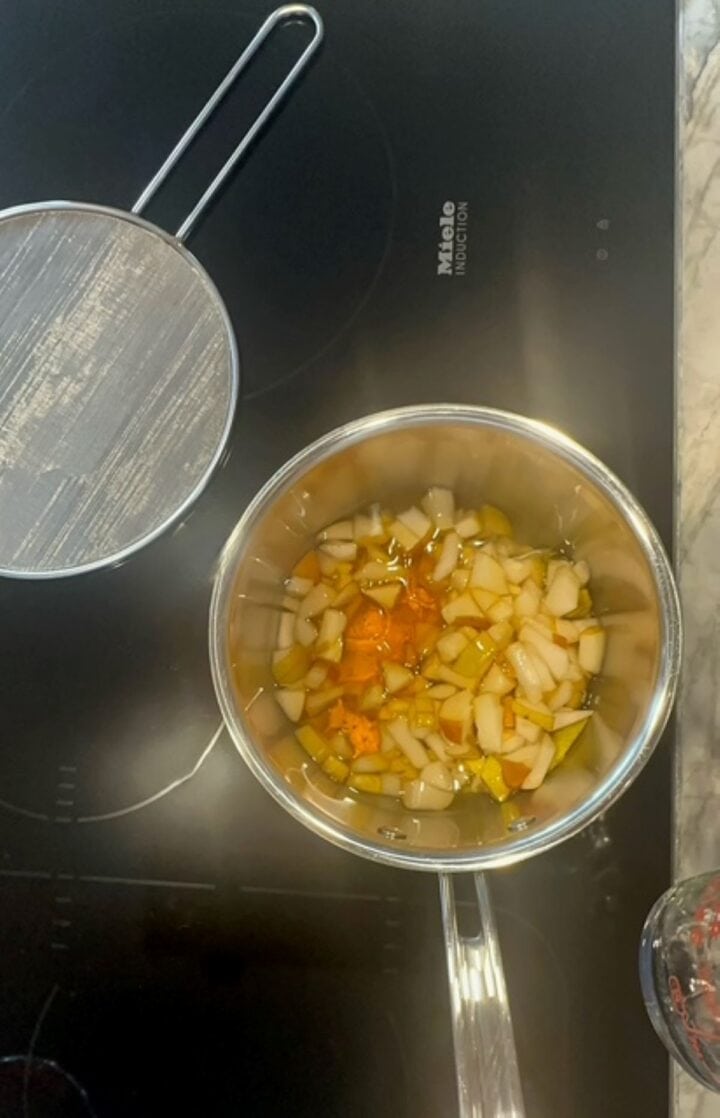
Simmer: Combine pears, ginger, water, and honey in a saucepan. Simmer until the pears become very soft. The longer you simmer, the more concentrated your syrup will be.
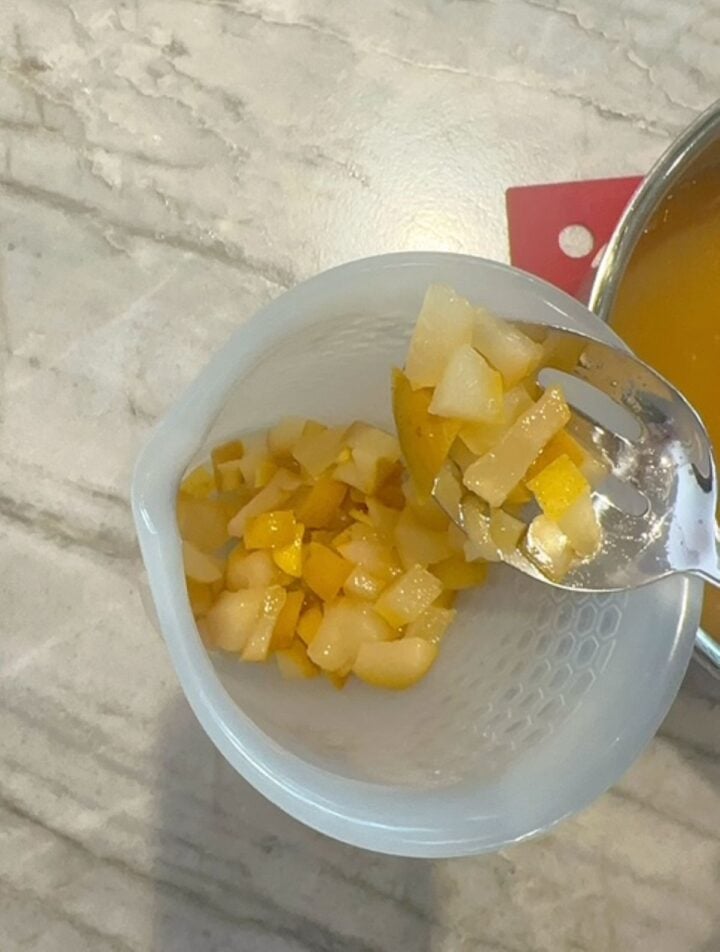
Blend: Transfer the pear pieces from the honey syrup to a large high-sided container.
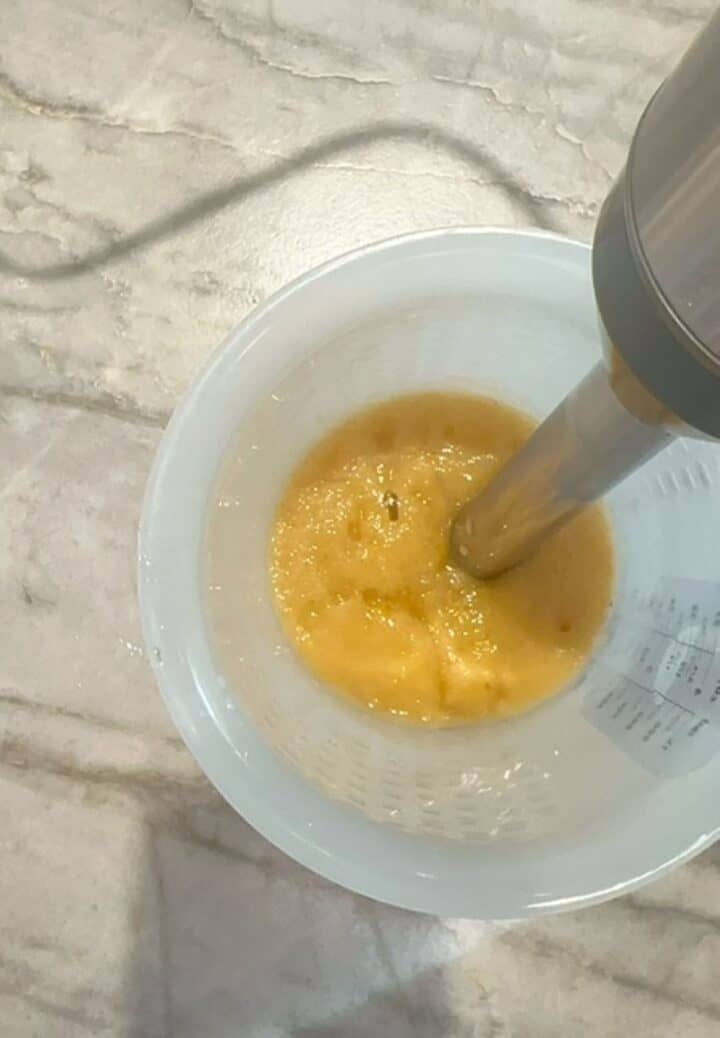
Puree them with an immersion blender (affiliate link).
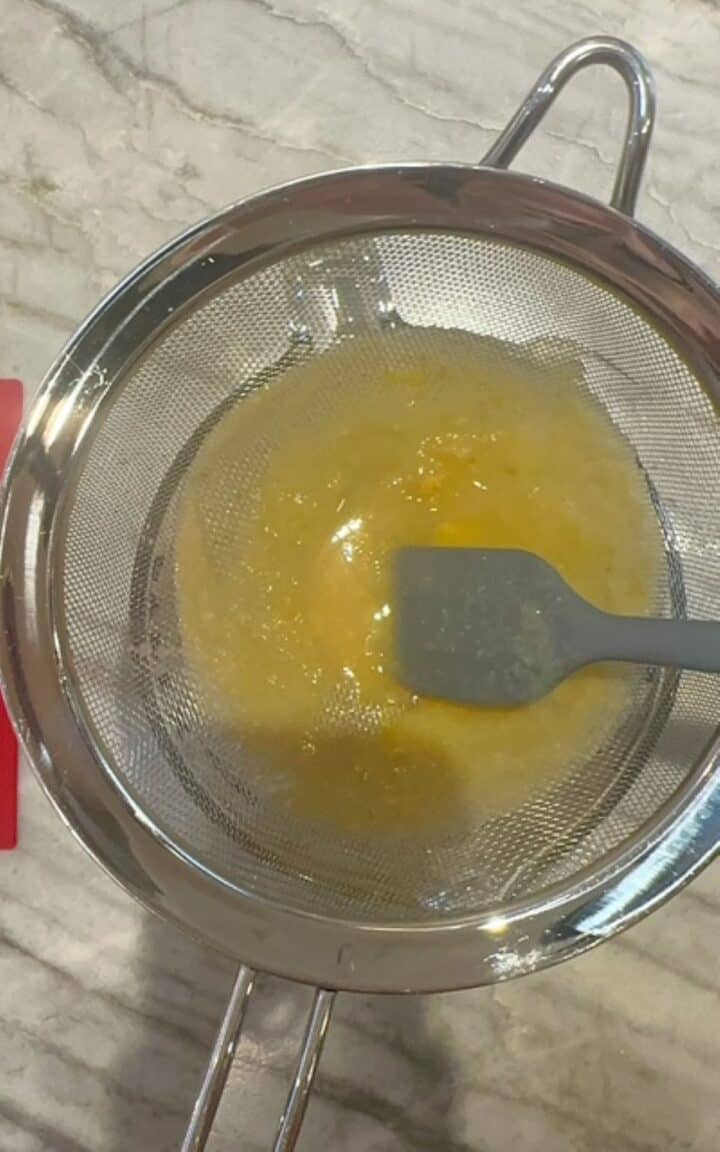
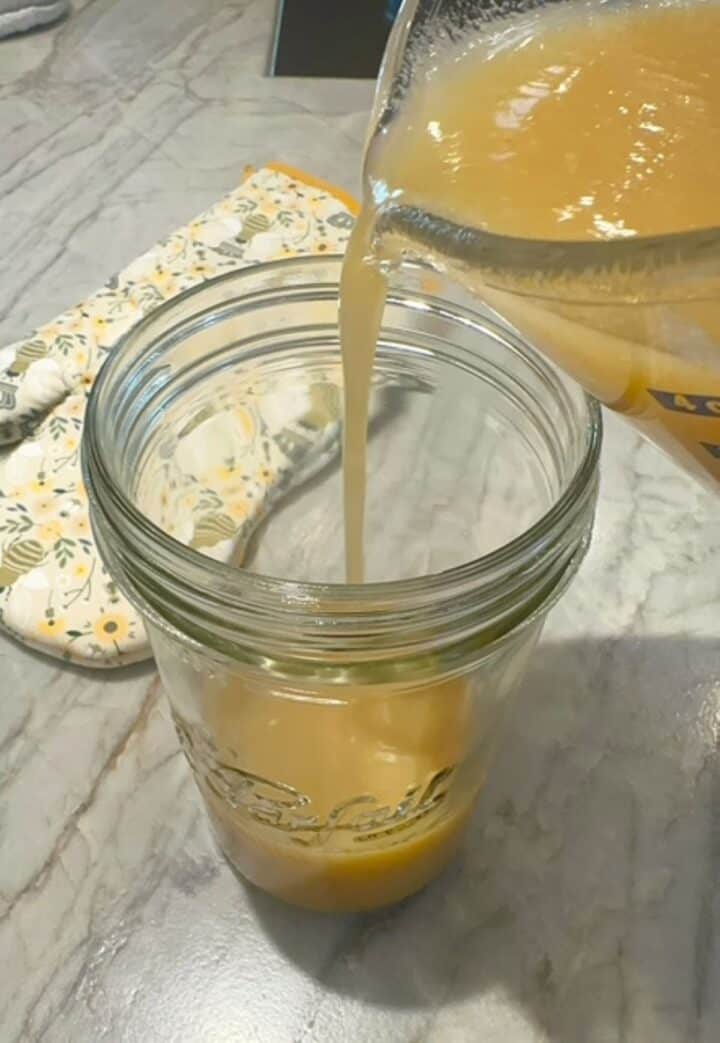
Strain: Pour the pear puree into a fine-mesh strainer (affiliate link) or a Chinois (affiliate link) and filter out any pieces of fruit or skin that are chunky. Use a spatula to push all of the puree through the strainer.
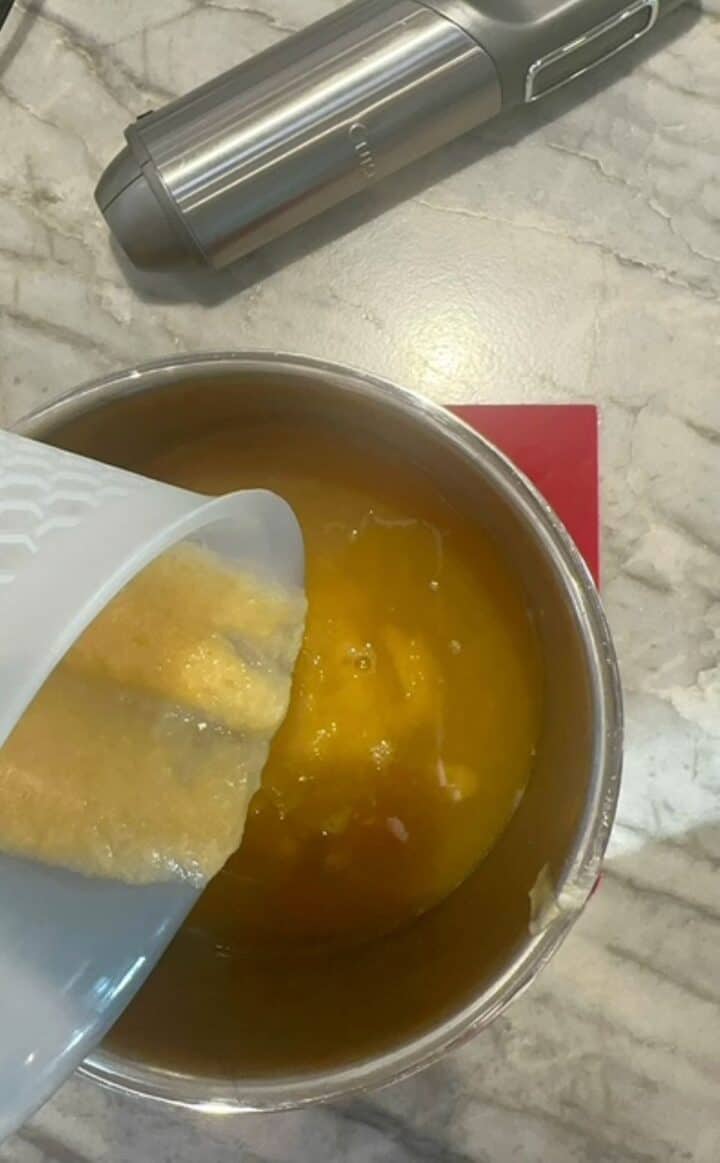
Add vinegar: Return the smooth pear puree to the honey syrup and pour in the vinegar. Stir until all ingredients are combined and uniform.
How to Serve
Garnishes and mixers make the difference between a ho-hum beverage and a knock-out punch!
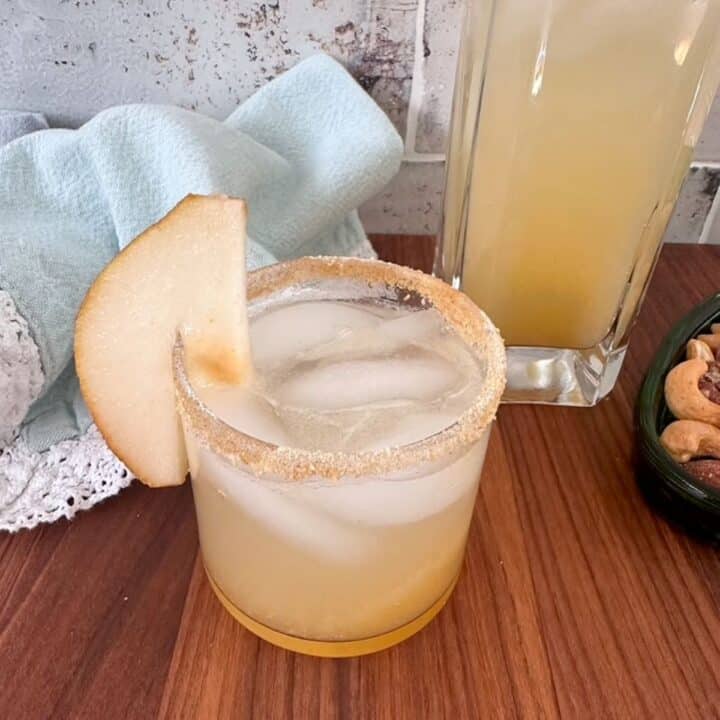
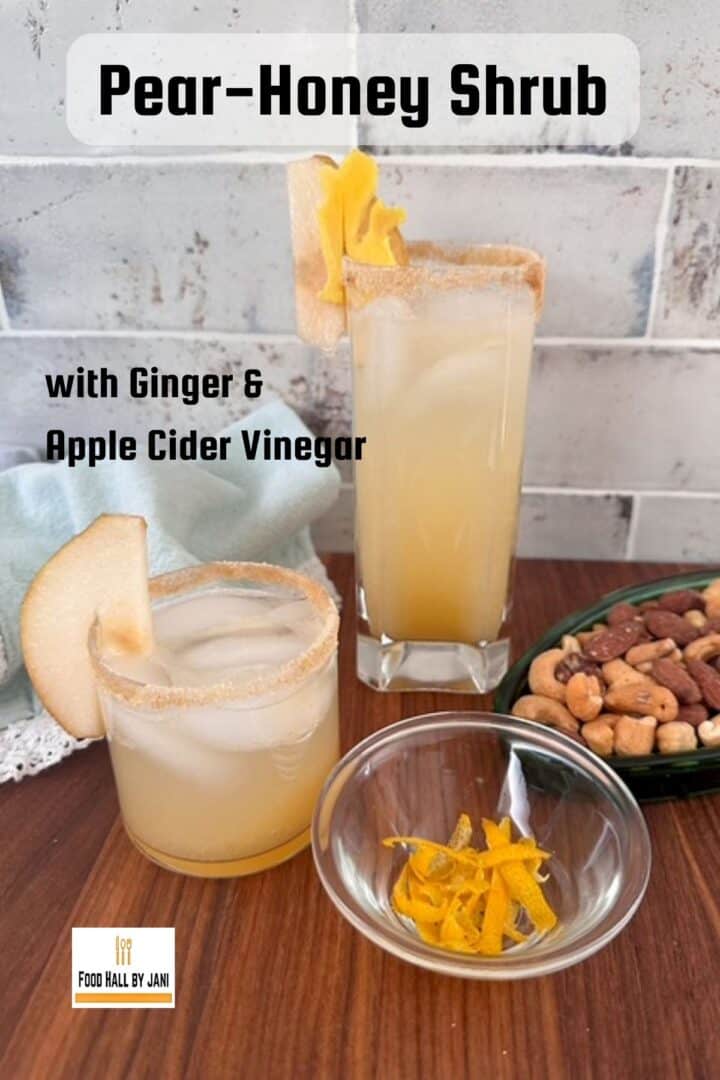
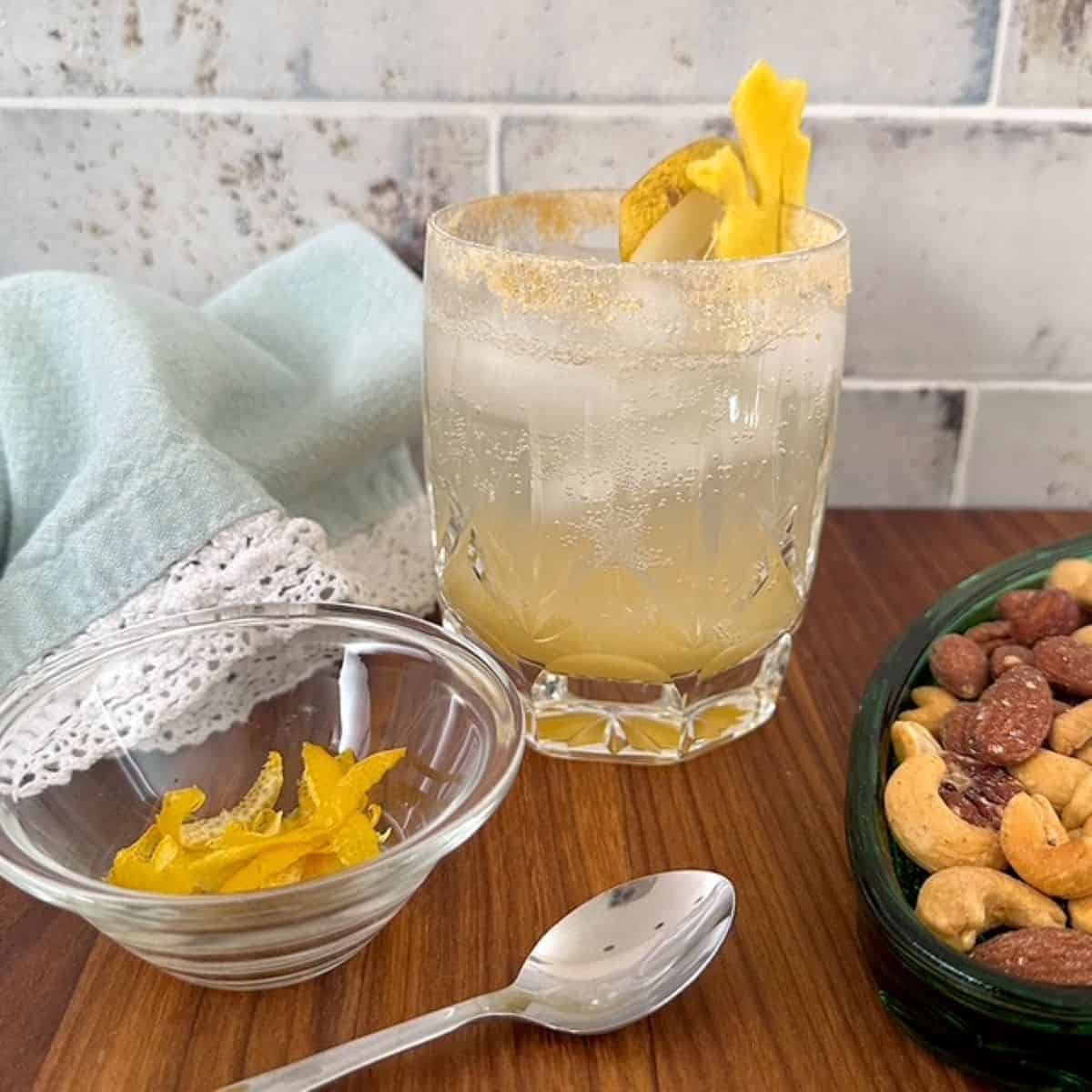
Rim the glass: Moisten the edge of a pretty highball or large wine glass and dip into maple sugar, date sugar, coconut sugar, or white sugar. For extra points, mix any of these sugars with cinnamon.
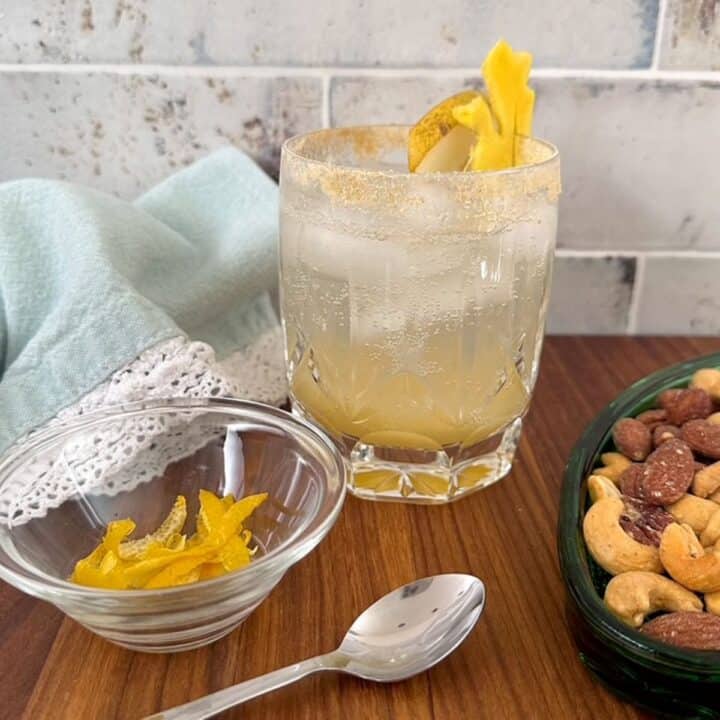
Mixers: Place ice cubes in the glass and add an ounce or two of pear shrub. Top with plain or flavored bubbly water and stir.
The sipping public seems to have an unquenchable thirst for bubbly water in a cosmic array of flavors. Good choices are orange, lemon, pomegranate, blood orange, and cherry.
Look for seltzer from brands like San Pellegrino, Spindrift, La Croix, Topo Chico, Waterloo, and many others. You can also make your own plain or flavored bubbly water with a Soda Stream (affiliate link) or similar machine.
Bitters are another way to amp your shrub. Most bitters contain a very small amount of alcohol, but it’s nothing that will be noticed or cause intoxication. These gingerbread bitters (affiliate link) are alcohol-free!
Garnishes are everything. Start by dipping the rim of a moistened glass into a flavored mix of sugar and spice. I used maple sugar mixed with cinnamon.
Slices of ginger and pear and citrusy accents like zest or orange slices are decorative and edible. Fresh sprigs of rosemary or thyme also add flavor and beauty to your shrub.
Cooking Tips and Storage
The recipe calls for ¾ cup of honey. This can be adjusted down to ⅔ cup if you prefer less sweetness. However, this may cause extreme tartness due to the copious amount of vinegar in the shrub, which is, after all, a sipping vinegar.
🍯Honey is so sticky! Coat your measuring cup with non-stick spray or vegetable oil, so the honey will slide out more easily.
You can try and push the pears through a strainer or Chinois without first pureeing them with an immersion blender, but you will have to simmer the pears for a long, long time to render them fall-apart soft.
Plus, you will strain out the skins, which add fiber and other nutrients!
Another alternative is to simply mash the pears, say with a potato masher, until pulpy so that your shrub is chunky and has more texture.
When you are making the honey syrup on the stovetop, keep a splatter guard over the top of the pot to minimize the sweet splattering that happens as the mix gently simmers.
The shrub will last 2 to 3 weeks minimum in the refrigerator, and perhaps as long as 2 months.
It’s best to store it in sterilized bottles. You can sterilize glass containers on the stovetop by boiling them for 10 minutes; place them in a hot oven (375 F) for 6 to 12 minutes; or use an Instant Pot.
Is It Healthy?
Apple cider vinegar’s (ACV) effects on health are controversial. It contains acetic acid, which kills harmful bacteria, probiotics that may help digestion and boost immunity, and protective antioxidants.
Purchase ACV that is raw and unfiltered and has a cloudy substance in the bottom of the bottle called the “mother.” It contains the byproducts of fermentation including flavonoids, trace minerals, and enzymes.
Some claims about its benefits include soothing acid reflux, promoting weight loss, and lowering cholesterol and blood sugar. ACV slows digestion, which can help with blood sugar management, but it should not be used by itself as treatment for diabetes.
Slowing digestion can also help you feel full for a longer time, which can help with weight loss.
Problems with ACV: It can also cause abdominal discomfort when taken in large amounts. Other possible side effects are interactions with medications and damage to your tooth enamel.
🫚Ginger
This root (used in traditional medicine for centuries) may help digestion more than the apple cider vinegar and it has a wealth of antioxidants. With more than 400 natural compounds, ginger is anti-inflammatory. It’s effective for nausea and can help relieve bloating and gas.
The pears add antioxidants, minerals, vitamins and fiber, especially since blending the skins into a puree helps retain their nutrition.
Honey
This natural sweetener contains a small amount of minerals, vitamins, amino acids, and phytonutrients. It has a slightly lower glycemic index than white sugar, and because it is sweeter than sugar, not as much is needed.
That said, honey is high in calories that come from sugars and will raise blood glucose. This shrub is a concentrate, which should be cut and diluted with water or seltzer and enjoyed in moderation!
FAQ
You will need more sugar for the same level of sweetness. Use a full cup of sugar. Stir frequently and make sure it dissolves and becomes a syrup.
This should not be a problem since the liquid has a long simmer.
Other vinegars that would make good substitutes include Champagne vinegar and white wine vinegar. Do not use plain white vinegar, which is too harsh.
Check your grocery aisle or specialty online sources for some newer vinegars, such as orange blossom, sherry, and pomegranate.
Other Recipes You Might Like…
- Pear-Cranberry Chutney: A seasonal sweet and sour preserve to accompany holiday foods. Another good choice for gifting!
- Ginger Milk Tea: An energizing black tea lightened with your favorite steamed milk.
- East Asian Pear Butter: This slow cooker recipe makes easy work of cooking down fresh pears and brown sugar into a delicious, caramelized spread. A very popular recipe!
Pear Ginger Shrub
Equipment
- 1 Medium fine-mesh strainer, or Chinois
Ingredients
- 1 pound pears, chopped
- 1 inch ginger root, sliced
- 1 cup water
- ¾ cup honey
- 1 cup apple cider vinegar

Instructions Start Cooking
- Wash hands thoroughly before starting the recipe, lathering with soap and rinsing with running water.
- Wash the pears, scrubbing the skin with a brush or your hands to remove any stuck-on dirt. After drying them slightly, cut lengthwise into ½-inch slices and then crosswise to make smaller, roughly-shaped pieces.1 pound pears
- Wash the ginger root and remove the peel with the edge of a spoon. (I often use a grapefruit spoon.) Slice through the center of the root to create two halves. Place the flat side of the root on the cutting board and slice thinly.1 inch ginger root
- Place the chopped pears, ginger root, water, and honey in a high-sided saucepan. Bring the mixture to a boil. Stir and reduce to a simmer. 1 pound pears, 1 inch ginger root, 1 cup water, ¾ cup honey
- Continue to simmer for 25 minutes, until the fruit is very soft.
- Using a slotted spoon, remove the fruit to a high-sided container along with about ½ cup of the liquid. Using a stick or regular blender, puree the fruit.
- Pour the fruit puree through a fine-mesh sieve or Chinois to remove any grainy bits and make it completely smooth. Return it to the pan and add the vinegar. Use a wooden spoon or whisk to blend the shrub until it is uniform.The texture will be slightly thickened.1 cup apple cider vinegar
- Let cool completely before storing in sterile containers
Nutrition
Would you like to save this?
You won't get spam from me, I promise!


Jani H. Leuschel
Yes! I like to use just an ounce or two of the shrub concentrate and about six to seven ounces of bubbly or still water, so it is not too sour.
Ruth Hall
Sounds perfect! I have found apple cider vinegar-/although it brings to mind ultra sour! to be a digestive aid in past recipes!